
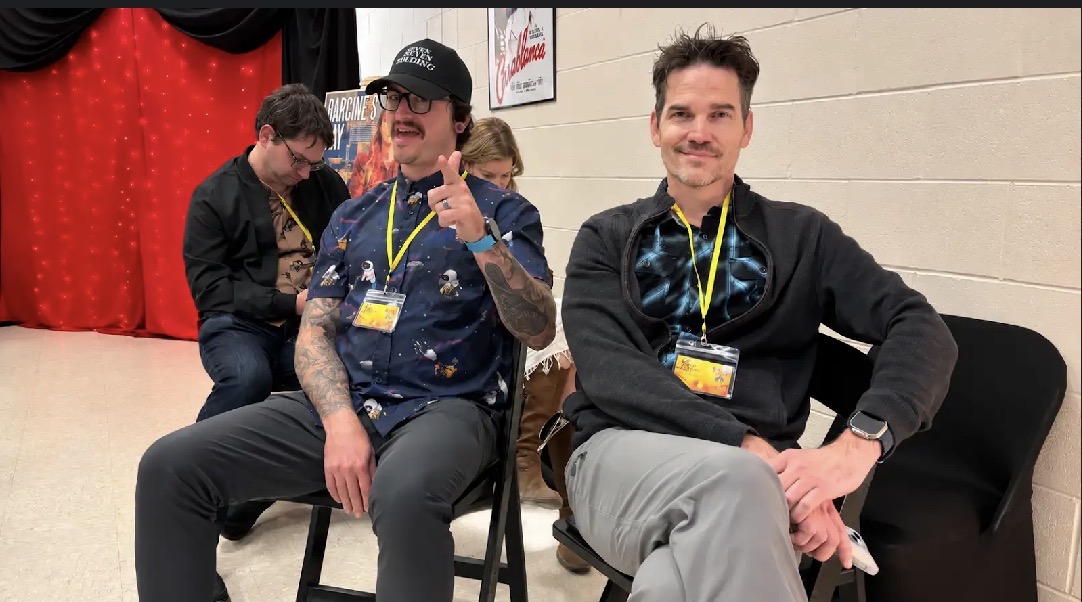
As awards season is about to burst again, a small film fest in the Mojave Desert of California isfocusing all its might on the new generation of filmmakers, connecting enthusiasts, regular moviegoers with real gems of films and their makers.
Yucca Valley is a small town in California’s Hi-Desert, best known as a gateway to Joshua Tree National Park. Yet every November, filmmakers from around the world make the trip for a festival that has steadily built a reputation beyond its geographical footprint.
The Yucca Valley Film Festival has just revealed its 2026 lineup, selecting 52 films from more than 600 submissions representing 34 countries. The eighth edition runs November 4 to 8. Admission is free.
But why is a small festival in a small desert town attracting so much attention and talent?
When bigger is not necessarily better
One of this year’s selections is Sell Your House, a feature documentary directed by Eric Foss about two friends trying to finance a film by selling a house. One is a filmmaker. The other is willing to put his financial future on the line to support his best friend and their shared ambition. And yes, problems ensue.
Foss recently attended Spain’s prestigious Sitges Film Festival and, as a filmmaker aiming to capture attention, he posted about it. Following that experience, he raised a question on social media: does the size of a film festival matter?He also questioned how audiences are supposed to discover a small independent film amid the noise and distractions of a major festival with a massive lineup.
It is a familiar problem. At large events, independent productions can struggle to compete for attention with heavily financed films and established industry campaigns. The imbalance that shapes film distribution can follow filmmakers onto the festival circuit.
Yucca Valley appears to be taking a different approach.

Less quantity, more attention
The festival is not trying to screen hundreds of films. Its 2026 selection comprises 52 titles, within its typical range of approximately 40 to 70 projects. The idea is straightforward: a carefully curated program gives each film more room to stand out.
The festival also creates opportunities for filmmakers to meet audiences through question and answer sessions, red carpet interviews, networking events and industry discussions. The State Farm interview booth provides additional media exposure, as well as a partnership with local TV station Joshua Tree TV, while the festival’s free admission makes the experience accessible to the local community.
These are not revolutionary concepts. They are practical responses to what independent filmmakers actually need: visibility, connections and an audience.

Made by filmmakers, for filmmakers… For real?
The festival is produced by MNA, a boutique creative production company led by filmmaker Matt Beurois and producer Auregan. Their own experience in filmmaking raises an obvious question: are they simply building the festival they would want to attend?
The program suggests that might be part of the answer. Key events and interactive spaces are intentionally designed to put filmmakers in the spotlight, or better yet: on a pedestal. Others focus on simply giving festivalgoers a good time, with films to discover and opportunities to meet the people who made them.
The festival and its program received recognition from the Town of Yucca Valley, the California Secretary of State, but also on the national level from the United States Congress. Its 2025 edition attracted approximately 1,500 attendees over three days.
Small town, big ambitions
The Joshua Tree desert has long attracted artists, musicians and filmmakers looking to work outside conventional and urban centers. Yucca Valley offers that creative environment, and the festival has become the Town’s flagship that gives visiting artists a reason to come, stay, connect with the people who live there. And come back.
When looking at the program of events lined up for this November, the festival’s 2026 motto, Your Spotlight Is in the Desert, is more than a promise: it’s a proven track record. The interviews are pre secured, the red carpet is the longest in the area, and the partnerships on which the festival is built are solid and lasting, with the Town of Yucca Valley making it its signature event by serving as its main sponsor.
Perhaps the formula is simpler than the industry makes it seem. Independent films need audiences. Filmmakers need opportunities. Audiences want good, original movies and the chance to meet their creators. Stars seem to align in Yucca Valley.
The Yucca Valley Film Festival’s repeated success raises a worthwhile question for the wider festival circuit: does bigger always mean better, or does it sometimes mean more competition for the same limited attention?
With 52 films, 23 screenplays and a growing reputation, the Yucca Valley Film Festival is betting that independent filmmakers need something more valuable than size: a chance to be seen, for real.
The eighth edition takes place November 4 to 8. Admission is free. Program, movies and events on yuccavalleyfilmfestival.com.